Discover
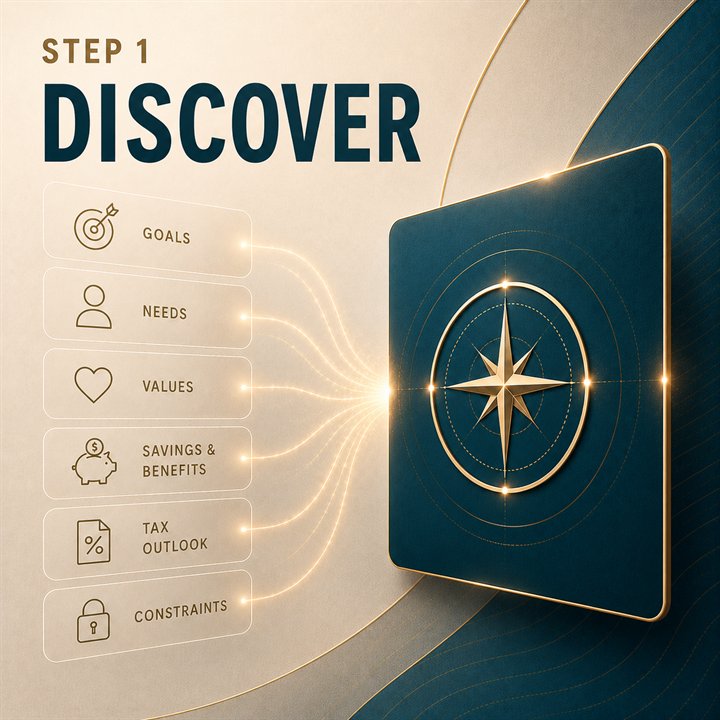
Listen and learn about goals, values, accounts, income needs, risks, taxes, preferences, and constraints.
Our Process
The Entrust Process moves from discovery to analysis, design, implementation, and ongoing review.
Listen and learn about goals, values, accounts, income needs, risks, taxes, preferences, and constraints.
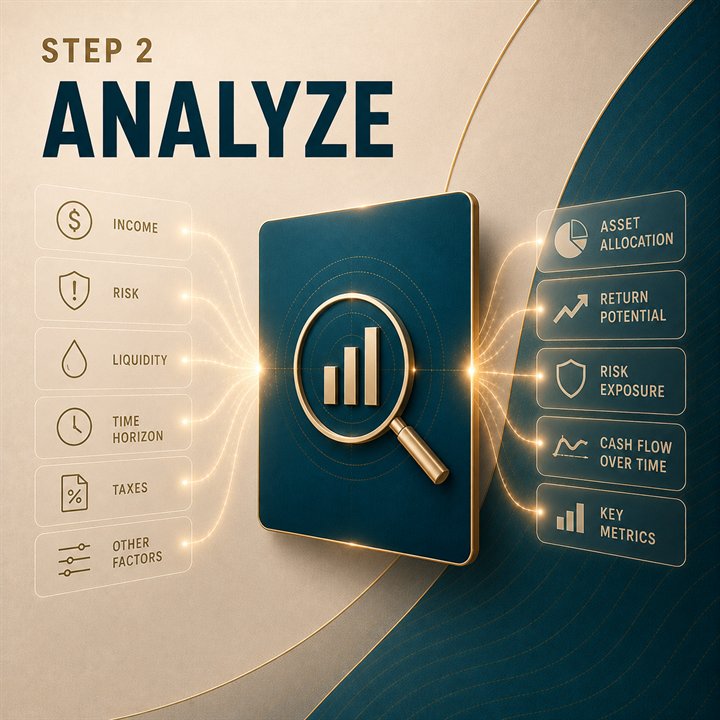
Review the full financial picture, including income, cash flow, risk, tax exposure, liquidity, and time horizon.
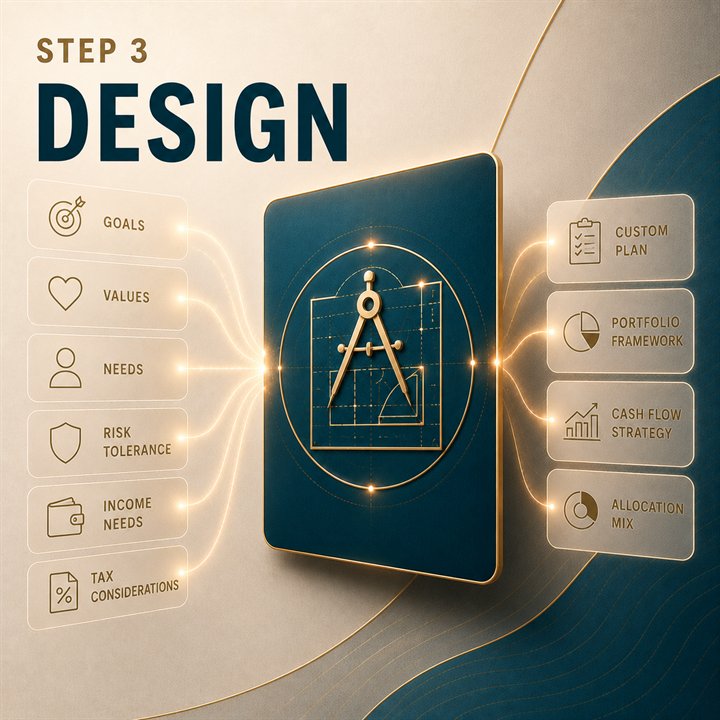
Build a strategy around the client's actual needs rather than forcing the plan into a generic model.
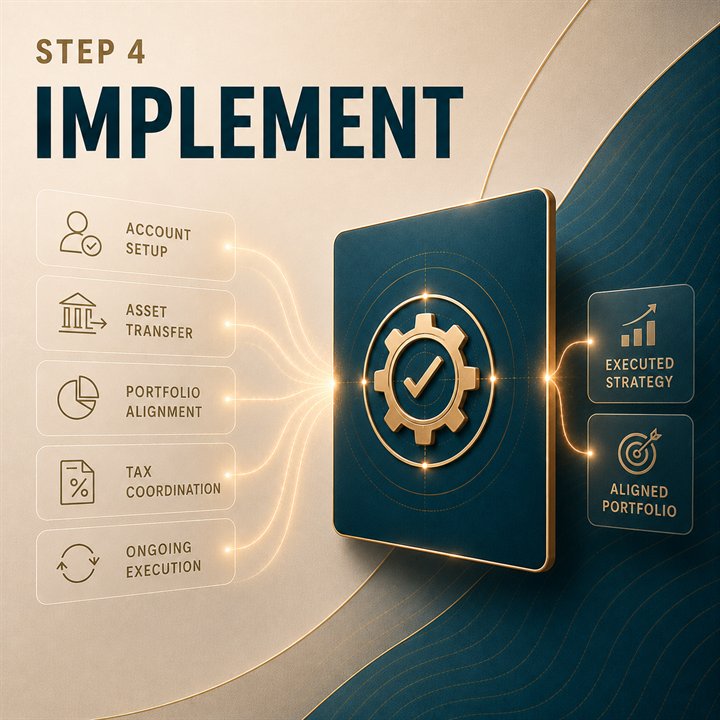
Coordinate accounts, investments, allocation choices, income tools, and planning recommendations.
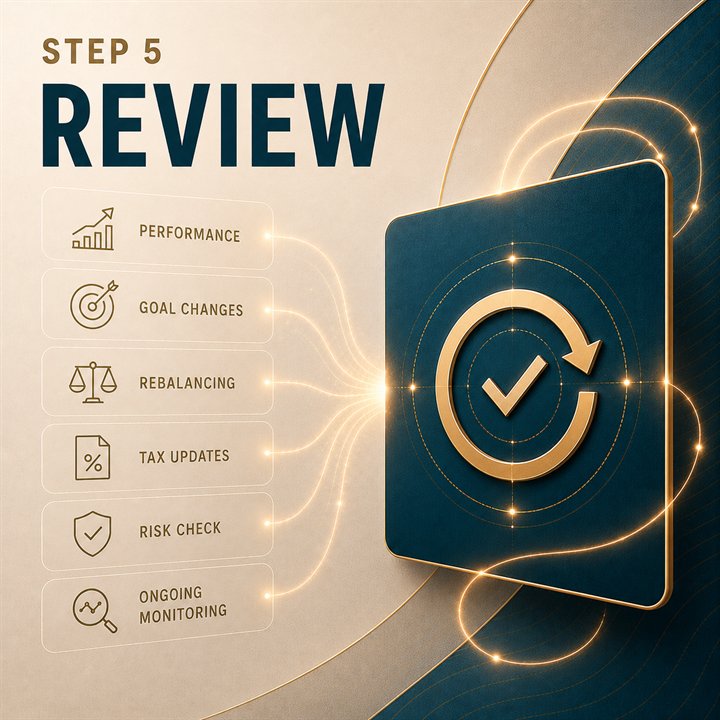
Monitor, adjust, and revisit the plan as life, markets, and client priorities change over time.
Planning output
A useful plan should show what matters, where you stand, what the numbers imply, and what to do next.
The income, investment, tax, liquidity, and risk questions the plan must answer.
Where accounts, income sources, current allocation, tax exposure, and known constraints stand today.
The tradeoffs, gaps, opportunities, and risks that should shape the strategy.
The practical implementation steps, review items, and professional coordination needed to move forward.
Step detail
Each phase is designed to move from conversation to analysis, from analysis to strategy, and from strategy to ongoing review.
Discovery is where an Entrust retirement planning advisor learns what the plan needs to solve.
We start by learning about your goals, needs, values, and current financial position. That includes savings, investments, income sources, and benefits already earned, such as Social Security or pension benefits.
We also work to understand your current tax outlook by reviewing prior-year tax information and discussing how different investments, savings vehicles, and income sources may affect you going forward.
Finally, we identify constraints that should shape planning decisions. For someone retiring earlier in life, that may include managing income around health insurance premium tax credits. For someone retiring at standard retirement ages, that may include reviewing Medicare cost scenarios.
Analysis turns the discovery conversation into a comprehensive view of your financial picture.
This is where the deeper planning work begins. We review your full financial picture and use planning software so your situation is not evaluated in a vacuum.
The analysis may include income, investment earnings, investment risk, tax exposure, liquidity needs, time horizons, estate values, inflation risk, tax risk, and potential income cliffs.
A comprehensive review helps reveal the strengths, weaknesses, tradeoffs, and planning gaps in your current financial position.
Design is where planning gaps become a custom strategy.
Once we identify mismatches between your goals, needs, values, and current financial position, we design solutions intended to address those mismatches strategically.
Entrust does not start by placing every client into a generic model portfolio. Large model-portfolio programs can be useful in some settings, but they may not reflect the specific income needs, tax exposure, liquidity requirements, risk tolerance, and priorities of a particular household.
Our process is built around custom asset allocation and portfolio strategy. The goal is to match the investment plan to your specific goals, needs, values, and current financial position.
Implementation turns the agreed-upon strategy into coordinated account and portfolio action.
Once a strategic plan has been designed and agreed to, we work with you to implement it. That may involve coordinating existing accounts, repositioning assets, and aligning the portfolio with the planning goals, needs, and values identified earlier.
Entrust's primary custodian is Charles Schwab. For clients who already use Schwab, implementation may involve assigning Entrust Investment Services as the advisor on eligible accounts. For clients at other custodians, we may assist with opening Schwab accounts and transitioning assets where appropriate.
If the plan includes tax-management strategies, such as Roth conversion planning, we coordinate with you regarding ongoing or one-time planning decisions. Tax strategies should also be reviewed with qualified tax professionals.
Review keeps the plan current as life, markets, laws, and priorities change.
Entrust's work is not finished after implementation. Tax laws, investment markets, goals, needs, health, family circumstances, and other variables can change over time.
We meet with clients periodically to review whether the plan remains current and relevant. The goal is to evaluate what has changed in the world, what has changed in your own circumstances, and whether the strategy should be adjusted.
Ongoing review helps keep the planning process active rather than static.
Next step
Schedule a conversation with Entrust to discuss your goals, income needs, tax considerations, and whether our approach is a fit.